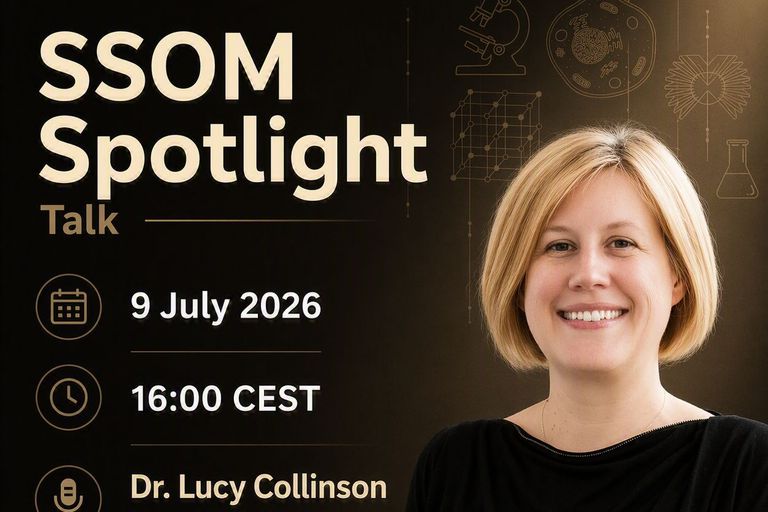
Lucy Collinson: Imaging life across scales with light, X-rays, electrons and ions
Imaging technology for the biosciences has taken huge leaps forward in recent times. Nobel prizes have been awarded for breaking the resolution barrier in light microscopy and cryo electron microscopy, revealing the cellular dynamics and atomic structure of molecules. In parallel, X-ray and chemical imaging are migrating from the physical to the life sciences, revealing the internal structure of tissues and metabolic pathways in exquisite detail. And in volume electron microscopy, a plethora of new microscopes are revealing the complexity of cells and tissues in three dimensions with nanometre resolution, thereby unravelling neuronal connections in the brain and the subcellular hiding places of pathogens. But the fundamental trade-off between sample size and resolution remains - the larger the sample, the lower the resolution will be. The solution is correlative multimodal imaging, where the same sample is imaged intact at low resolution, and then gradually trimmed to smaller sizes for imaging at higher resolution in different types of microscope. The trick is to retain and follow the structure of interest at each step, with optimal sample preparation for each microscope, using probes that are visible in different microscopes and software to overlay different image types. This is ‘non-trivial’! In my talk, I will reveal how we approach this problem of finding and imaging the ‘needle in the haystack’, and how the general public are helping us train machines to analyse the resulting massive image data.
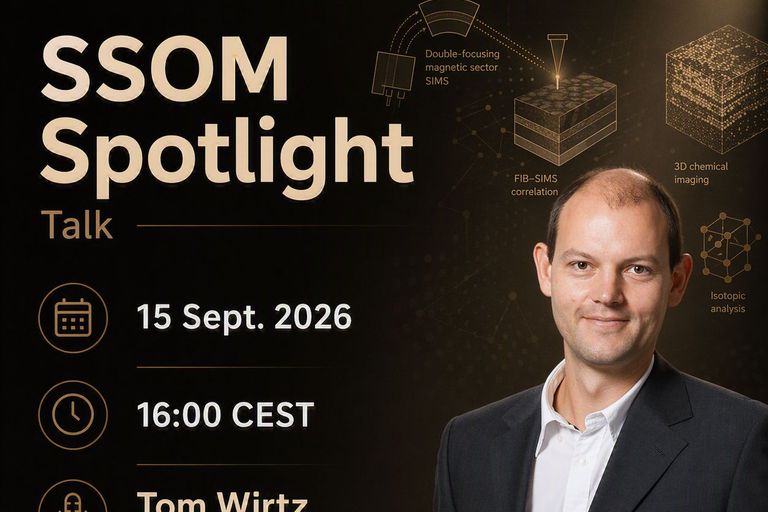
Tom Wirtz: Advanced multimodal nano-analytical capabilities on FIB instruments using SIMS: new developments, applications and prospects
Structural characterization and chemical analysis at the nanometer scale are essential across many fields, including dopant imaging in electronic devices, chemical mapping of sub-cellular biological structures, and isotopic analysis in geology. Our instrument developments focus on four key capabilities: highest spatial resolution, excellent chemical sensitivity, high dynamic range, and isotopic selectivity. Secondary Ion Mass Spectrometry (SIMS) is a powerful surface analysis technique due to its ability to detect all elements and isotopes with high sensitivity and dynamic range. SIMS supports mass spectra acquisition, depth profiling, and 2D/3D chemical imaging. Integrating SIMS with focused ion beam (FIB) instruments enables highly sensitive analysis, ~10 nm resolution imaging, in-situ process control, and direct correlation with complementary techniques such as SE, BSE, and EDX imaging. Within this context, we developed several generations of double-focusing magnetic sector SIMS systems. The latest version includes a continuous focal plane detector capable of parallel mass detection for every pixel, enabling acquisition times as short as 1 s for a full mass spectrum or 2 min for a 512 × 512 pixel SIMS image with excellent signal-to-noise ratio and dynamic range. Compared with time-of-flight systems, it offers higher transmission, better sensitivity, and operation in DC mode, resulting in significantly higher secondary ion counts. The SIMS system is now integrated into several multimodal FIB platforms, including Thermo Fisher DualBeam systems, ZEISS ORION NanoFab, SIMS:ZERO, and RAITH VELION. This work reviews the performance of these instruments, highlights advances in high-resolution 3D chemical imaging, presents applications in fields such as electronics, photovoltaics, biology, and geology, and discusses future trends and prospects.

Spotlight SSOM Talk: David Cooper
Title to be delivered
Spotlight SSOM Talk: Anna Steyer
Title to be delivered
SSOM Fall meeting 2026
We are pleased to announce the next SSOM Fall Meeting, taking place on 25 November 2026 in Sion, Switzerland. The working title of the meeting is “In-Situ Electron Microscopy”.